Tales of a Midwest Lutheran on the East Coast
Showing posts with label writing. Show all posts

Sunday, September 15, 2019

Saints and Sinners, Lost and Found


9-15-19 Kick Off Sunday
Grace to you and peace from God our creator and from our Lord and Savior Jesus the Christ by the power of the Holy Spirit, Amen.

A few months ago, I went to 5 Below North Wales to find some glowsticks for our campfire, when two women approached me, asked if I “believed in the female images of God.” I bet you could imagine how that went. After about 5 minutes I could tell they were tired hearing me go on and on, so I gave them my card … and big surprise, I haven’t heard from them yet!

We know in our hearts that God is neither male or female (or black or white), but let’s admit it – our language still tends to skew to the male pronoun when we talk about God, and out of habit, even I slip up sometimes. We speak and we imagine from the perspective we are familiar with. While the Bible was inspired by God and written by men of faith (mostly because women weren’t educated at the time), they were still bound by their own experiences. Even Jesus was sometimes! … as you may have noticed last week, when the stories he told were from the perspective of kings, armies, business owners, and construction workers.

But every once in a while, language describing God from female perspectives peaks through, to remind us that if we have been created in God’s image – male AND female – God has attributes of both. God is a nurturing mother who gives birth (Deut. 32:18) and nurses us, her children (Isaiah 49:15), God is a seamstress (Gen. 3:21) also a knitter (Psalm 139) and a baker (Matthew). During this year of Luke, we hear that God looks for us like a woman looking for a lost coin (15:8-10) as we heard today, and Jesus describes himself as a hen who wants to gather us like chicks (13:34).

The Gospel of Luke is also full of these descriptions, and is also populated with bold women who are faithful follows of Jesus – Mary his mother, Mary Magdalene, the women at the empty tomb, just to name a few. We are blessed to be part of a denomination where the gifts of women are recognized, where they can serve at the highest levels, including our presiding bishop. But as I said at the banquet at the ELCA churchwide assembly, the night we celebrated the ordination of women no matter what race or who they love, we have not “arrived” yet. We still have a long way to go.

If we had truly arrived, these 50 years after the first white heterosexual woman was ordained in one of the predecessors to the ELCA, then THIS book would never have needed to be written.  I read this book earlier this year when it was fresh from the publisher. It comes from the perspective of someone called to ministry who is from one of the “lost” groups,” and by its title “One CoinFound” you can probably tell that it draws heavily from the “lost” stories we hear today.

Author and pastor Emmy Kegler grew up Episcopalian, is now a Lutheran pastor. This book is her story about how she as a queer woman pastor grew to fall in love with the very same scriptures that many Christians have used against her throughout her life. Perhaps not surprisingly, Kegler was always deeply drawn to the story of all the “Losts” in Luke, - lost sheep, coin, culminating in the Lost/ Prodigal son.

She reflects on the nature of sheep and of coins, saying that sheep tend to wander, but usually for good reason … hunger, thirst, exhaustion, fear (of predators). But what is the coin’s excuse? Kegler writes, “the funny thing about coins is that they can’t get lost by themselves” … “Coins get lost because their owners aren’t careful….” And when coins get lost, they tend to their shine (and their perceived value), which makes them even more difficult to locate.

But is God the one who loses us? With every story Jesus tells, and with every image we use to talk about the kingdom of God, there is a “yes” and there is a “no.” God is LIKE a knitter, but God does not actually take up knitting needles to make a scarf. Our limited human language can only tell so much of infinite truth of who God is, and we often reach out to more tangible things to anchor us, for better or worse. Emmy reminds us that “We experience God through our experience of others…” but is also careful to clearly say, “God has never been careless with us, but those who claim to speak for God have.” Church leaders, not God, cause some of the most vulnerable sheet to be lost - to be disregarded and left to get dusty like the coin or starved for love like the sheep.

Pastor Kegler experienced this so painfully in her own life, as growing up she struggled to reconcile the revelation that she both gay and a Christian, and how the people of deep faith around her, who she though loved her, could reject her because of it.

In the fall of Pastor Kegler’s senior year of high school, 2 years after starting to attend “Watermark” (a non-denominational youth centric church in Minneapolis), a preacher in training came from a nearby seminary to rail against same sex relationships. Traumatized and triggered by his hateful words, she left the sanctuary to collect herself. Her “friends” followed her, pressuring her to “repent” of the way God had created her. That night, the people Kegler though were her friends turned on her, and she saw their true colors. She never went back to that church or those people.

Years later, on a Sunday morning during worship in the chapel of a Lutheran college, Pastor Kegler was unwillingly pressed into service to help distribute communion. When someone handed her a plate with the bread, she panicked. She tried to hand it back to one of the campus pastors, telling him, “I can’t serve, I’m not trained.” He asked her if she knew what to say, she responded without thinking, “the body of Christ, given for you.” He handed the plate back to her and said, “there you go, you’ve been trained.” In that moment, and in every moment of love shown to her since, Kegler was truly found. Now, she is happily married, a pastor in the heart of Lutheran country – St. Paul MN, a published author, and sough-after speaker and preacher.

I think we can all see why, when Kegler describes God hitching up her skirts to get down and dirty on the floor to search for lost coins like her. “God has taken up a broom and cleared each corner, untucked and re-tucked each sheet and quilt, turned over pitcher after pitcher to see where we have landed.”

Our own found stories probably look a little bit different form Emmy Kegler’s, and may not seem worthy of publishing as a memoir, or at least not as “interesting.” But I think all of us have experience what it means to be hungry for something – for empathy, for acceptance, for someone to see our worth, for someone to love us for all of our flaws and brokenness, and the disappointment we feel when our deepest needs are not met by the people we thought cared about us. Most of us, I believe, HAVE  felt the sting of rejection when those who seem to have everything – power, influence, comfort, privilege – sneer at you and judge you when you leave the “correct path” they have laid out for you, using some misguided  interpretation of God’s words.

Listen closely here to the words of Jesus, then. How then can we stand in the way of Jesus, when he very clearly stands in for the shepherd who abandoned the ninety-nine sheep to find the lost one, and the woman who stayed up late into the night to find her coin that had gone missing? The body of Christ is not complete until all of us are found in God and loved with dignity by those of us who call ourselves Christian. And yes, that might not just include feeding them…. But eating WITH them, at the same table, side by side, elbow to elbow, with Jesus.

Perhaps we don’t have a lot of tax-collectors floating around anymore, but we all encounter people that we grumble at we deem “undeserving,” and want to begrudge a seat at the table. The good news is that Jesus eats with sinners…. And its good news BECAUSE WE are sinners. The repercussions of some sins might be more obvious than others.  But all are given a spot next to Jesus. All of us are, in the words of the commendation at the end of our funeral service, we are “sheep if [God's] own fold, [lambs] of [God's] own flock, [sinners] of [God's] own redeeming.”

One of the last things that Rachel Held Evans wrote before she died this spring, was write the introduction to this book, One Coin Found. Evans words ring achingly true in light of her sudden death, when exhorts us readers to remember that “you …  are immeasurably beloved by God, …with the help of the great communion of saints, …. you… will always and ever be found.”

Nothing can separate us form the love of God. In life, and in death, we are loved, and we are known, and we are found. Because God will stop at nothing to gather those who are lost. Now it’s our turn, to tuck up our own skirts, find the broom, and join in the search with that great communion of saints… and sinners. Thanks be to God. Amen.

Tuesday, May 30, 2017

Coffee: International Third Lutheran Sacrament


I wrote this for our quarterly e-newsletter, summer 2017 edition:

There is a joke among Lutherans that coffee is the Third Lutheran Sacrament (after Baptism and Holy Communion). Though I was a life-long Lutheran, I did not begin to drink coffee until I had an 8 AM Hebrew class in Seminary five days a week. After that, I was hooked! So one of my concerns in traveling to the 12th Assembly of the Lutheran World Federation in Namibia was of course - what will the coffee situation would be? I needn't have worried. At least four times a day the assembly had a coffee and tea break, with hospitable hotel staff setting out hundreds of coffee cups and saucers for jet-lagged participants such as myself. We conversed over our coffee. That is how I met bishops and pastors from Canada, Indonesia, Ethiopia, Tanzania, Hong Kong, and Guyana. Every day in the Omatala "Gathering" tent, women from Ethiopia shared a special coffee ceremony in the "Katie Luther Corner" every day at 2 PM. Extra-strong coffee was served to us in special cups with a generous helping of sugar by Haregewyn Moges Kidanewold, director of Gudina Fumsa Training Centre in the Evangelical Ethiopian Church. She made us feel connected to this special part of the Ethiopian culture. Because we are ALL part of the body of Christ together, Lutherans and Christians from all parts of the world.

 
The next time you partake in the Third Lutheran Sacrament, whether coffee or tea, I encourage  you to think about our connections to one another. Do I know where in the world my coffee came from? Who harvested it, and were they fairly paid? Did I grab my coffee while on the go, or am I able to use my coffee break time to make connections with friends, co-workers, or even strangers? Especially over the summer as we disperse in all directions, we can still remember that we are all connected to this same family of God, no matter where we may find ourselves - working, at the beach, with family, traveling, or drinking coffee. Safe travels this summer and enjoy your coffee! 
            

Yours in Christ,
Reverend Lydia Posselt

Sunday, July 12, 2015

My favorite fan mail

I got a few bits of fan mail for writing devotions for "Christ in our Home." Mine were June 1-15. A couple were emails, and I even got a letter. The letter made me laugh to much, and made me so thankful. A women in Wisconsin wrote:

"...they had such an impression on me the way you wrote, I felt like I was talking to a long time good friend."

My other favorite is an email I got. I'll include the devotions she references for context.

Saturday, June 13

2 Corinthians 5:6-10, 14-17

"Keep Going "

For the love of Christ urges us on… v14

The way is lonely, your legs are aching, your breath comes raggedly and hurts in your lungs, the road is uphill, and your throat is parched. Every fiber of your being wants desperately to give up, throw in the towel, admit defeat, to just STOP already.  But you see something in the distance - a person waving by the wayside. As you get closer you hear that he’s calling out, but you can’t yet understand what he’s saying. When you approach, his words become clear: “You can do this! I believe in you! I love you!” Why should you listen to this lone voice among all the negative ones, both within your head and without? Because the man from which they come has traveled this journey before you, all the way to the end, and has returned in order to be part of yours. You can still hear these words echoing in your mind long after you have passed him. In fact, it sounds like he is right next to you, running along beside you, urging you on when you stagger and your steps lag. “I am with you! You can do this! I love you!” You are able to hold your head up and see the other runners around you, encouraged by the same voice, traveling the same path. And so you are able to keep going, knowing that Jesus is waiting for you at the end of your journey as well. 

She wrote:

Hello Pastor Lydia,
      My friend and I took a 5 - day road trip from California to Jackson Hole, Wyoming to run a Half Marathon together.  I took my Christ in Our Home devotional along with me to read each morning before we started out our long days of driving.  I wanted to let you know how God perfectly timed and orchestrated your devotional for the a.m. of our race, Saturday, June 13th.  Both my friend and I had been extremely anxious about our run, as it was in high altitude, 6000+ feet, and I had been suffering from a tentative knee injury.  So you can imagine how encouraging it was to read your "Keep Going" title for that day, with Paul's scriptures from 2nd Cor. 5!*:) happy  The second paragraph, "But in the distance you see a person waving by the side of the road.  As you get closer, you hear that he's calling out to you:  'You can do this!  I believe in you!' I love you!'...... was so perfect, as we were encouraged by volunteers handing out water, etc. every 3 miles or so, and it reminded me that Jesus was jogging each step along with us throughout the race.  
    Both of us finished the race and got our medals for completing it.  Your words, God's presence and our faith, as we ran along a beautiful trail experiencing God's creation and majesty, made it a day we will always remember.
     I just wanted to write and let you know how uplifting, the words and devotional you planned so many months ago, would be of so much encouragement to 2 Lutheran middle age women, taking the challenge of doing this 1/2 marathon together in "God's country" so many months later!  God is good! May God continue to bless you in your devotional writings and in your ministry!


I feel so blessed and so humbled to have had such a cool opportunity to reach so many people across the country!

Wednesday, June 24, 2015

Summer of Bread: Wednesday, June 24

Week 1   -    Wednesday, June 24

Say a prayer before your meal.  Then read aloud the background introduction and text, followed by one or more of the discussion questions.

Introduction: In John’s gospel, the miracles of Jesus are called “signs,” because they reveal the character of God. As such, they remain within the mystery of God and cannot be brought under human control.

John 6:5-11 
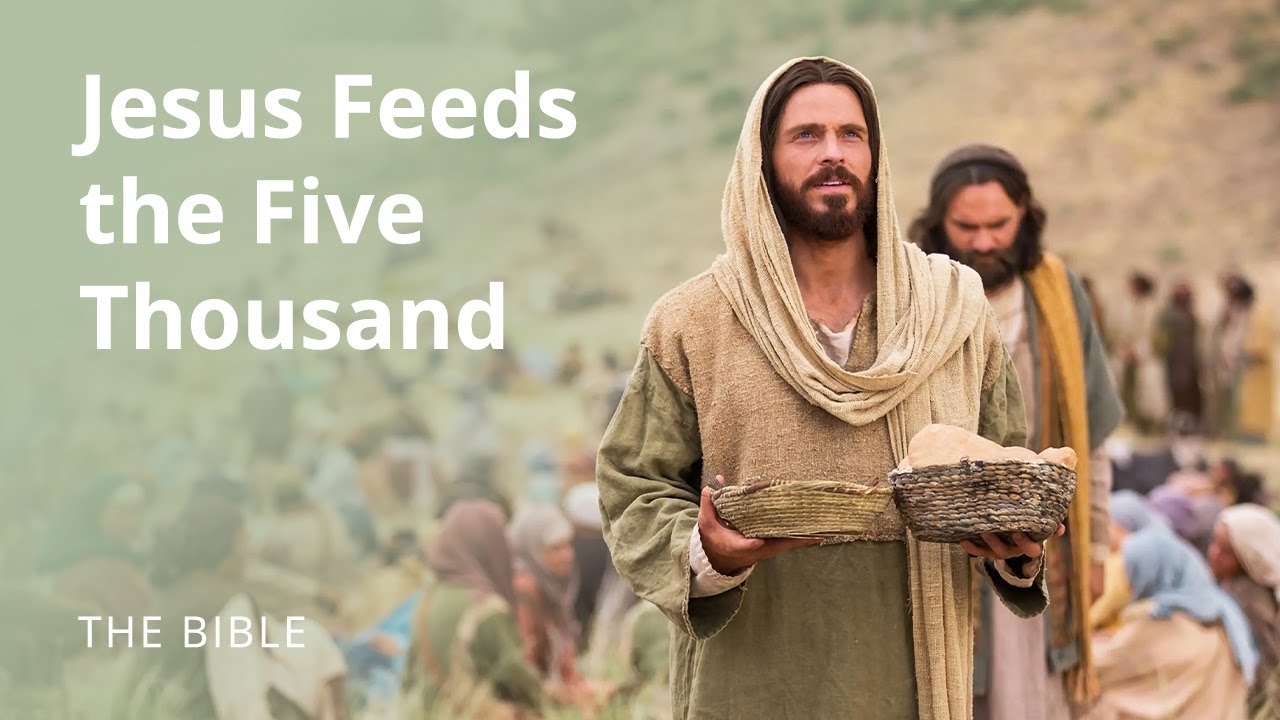
When he looked up and saw a large crowd coming toward him, Jesus said to Philip, “Where are we to buy bread for these people to eat?” He said this to test him, for he himself knew what he was going to do. Philip answered him, “Six months’ wages would not buy enough bread for each of them to get a little.” One of his disciples, Andrew, Simon Peter’s brother, said to him, “There is a boy here who has five barley loaves and two fish. But what are they among so many people?” Jesus said, “Make the people sit down.” Now there was a great deal of grass in the place; so they sat down, about five thousand in all. Then Jesus took the loaves, and when he had given thanks, he distributed them to those who were seated; so also the fish, as much as they wanted.

Discussion questions (choose one or all!! 10 minutes or hours!) *indicates questions that might be suitable for younger children

1. Have you ever followed someone or done something where you lost all track of time and forgot to do things like eat or sleep? Why were you so drawn in?

2. How do you feel fed by Jesus? How have you seen other people used by Jesus to feed and care for others?

3. *God tells us to share with one another. How do you feel when you are asked to share? How do you feel when someone shares with YOU?

4. Have  you aver faced a task that felt so incredibly overwhelming? (like feeding 5,000 yourself?) Who or what helped you? Prayer? A friend’s encouragement?

Tuesday, June 9, 2015

Prayers in regard to the heroin epidemic

I am part of our NJ Synod Substance Abuse and Recovery and Engagement team, which lead one of the break out sessions during synod assembly. My role was to pray at the beginning and end of the session. This kind of thing is not exactly covered in our red pastoral care book, so here is what I came up with. I hope it can be helpful. The heroin epidemic is not just for the inner cities and urban areas. Kids with sports injuries can be prescribed opiate pain killers, and heroin is a cheaper and easier to get alternative. A shot of heroin now costs less than most 6 packs of beer ( $5-7). See more information on the NJ heroin crisis here.

Holy God, there are so  many forces in this world that defy your will and draw us away from you. This world is in the sway of the devil and all his empty promises everywhere we turn. We and the people we love are in the grip of these empty promises, one way being in the thrall of heroin addiction. Save us, Lord. Rescue us, Lord. Comfort us, Lord, Strengthen us, Lord. Encourage us, Lord. Be with us Lord. Amen. 


Loving God, We thank you for this time of learning and fellowship and blessing one another. You have strengthened and equipped us in mind, body, and spirit to be a resource and representative of your loving presence to our families and friends suffering from all aspects of heroin and drug addiction. Send us out into this broken world that you love to be your agents of peace, strength, and comfort. Amen. 

Saturday, February 1, 2014

Let Your Light Shine

February Newsletter Article

“In the same way, Let your light shine before others, so that they may see your good works and glorify you Father in heaven.” Matthew 5:16

I remember coming across this verse as a teenager and instantly loving it. For me, this verse told me that the light of God was in me, shining out. And yet, at the same time, this verse frightened me a little bit. For a shy, introverted teenager the thought of shining out and attracting attention scared the dickens out of me. But I still liked this verse, and even used it as my confirmation verse. Because it reminded me that the light does not come from being and doing good. It is through what I do that shows God’s light shining within me. And light is meant to be shone. It would not make any sense to turn on a lamp and then through a blanket over it.
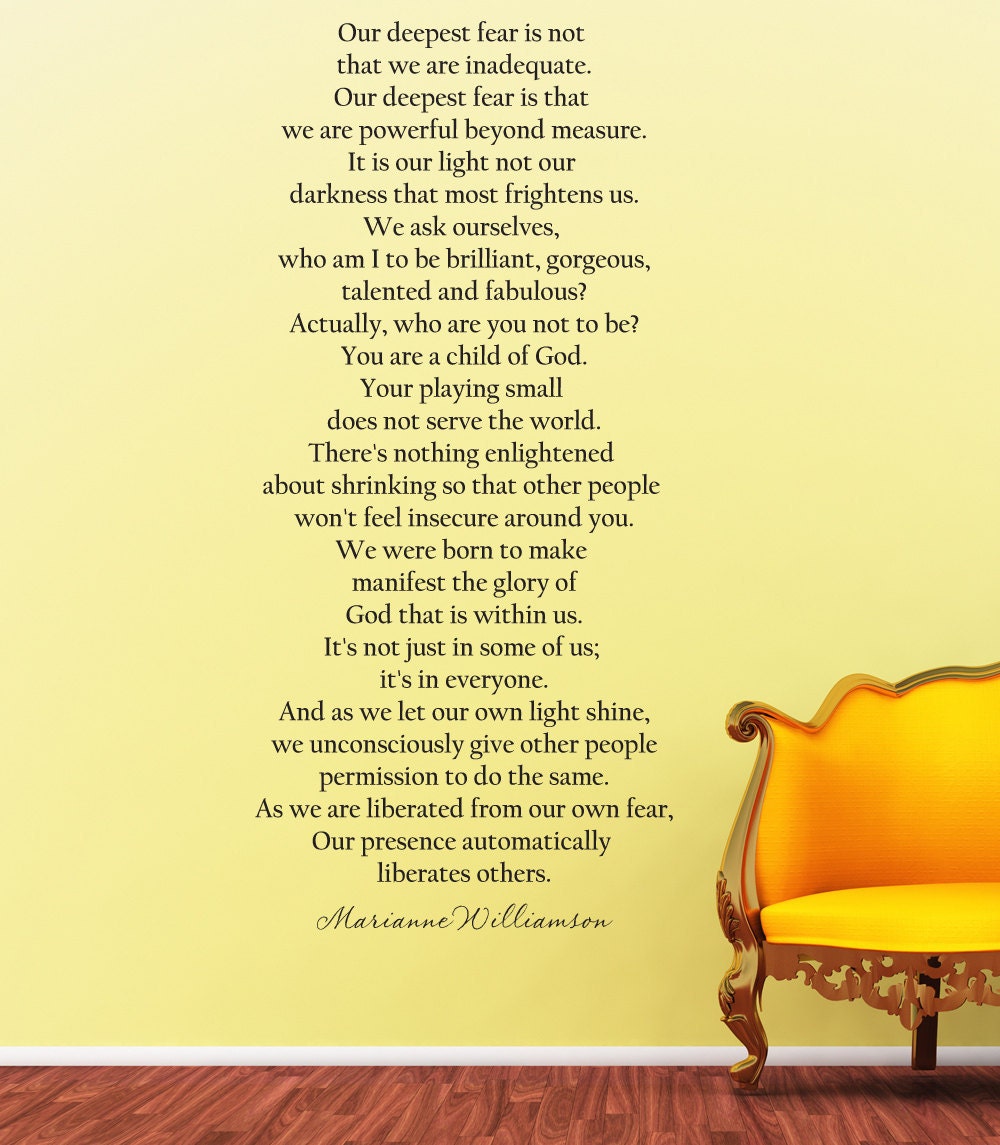
And yet, that is what we so often do. In this extended season of Epiphany, the season of light, we are reminded that it is not darkness that we are really afraid of. It’s the light. Darkness is comfortable – it covers a multitude of sins. It gives us an excuse to NOT to live into who God is calling us to be. But, as Marianne Williamson wrote in her poem “Our Deepest Fear:”

We were born to make manifest 
The glory of God that is within us.

This year, in the New Jersey Synod’s yearly February retreat for high school youth at LBI, the theme is “Mine” – the fact that we belong to God enables us to navigate an often scary and unsafe world, knowing that our God walks with us. Each of our young people are lights shining out in the darkness every day, in the midst of bullying, drugs and alcohol, challenges at home or school, navigating social media, and growing into who God has created them to be. And they need our support and example now more than ever.

We too can let our light shine into the darkness that is in our own lives and in the lives of others. It does not have to be complicated or heroic. Just the normal, regular, everyday light-shining of love will do.

Here is the entire poem:


Monday, December 30, 2013

End of the Year Book List

My top 10 favorite books that I read in 2013, in no particular order:

1. The Elegance of the Hedgehog, Muriel Barbery. This is a novel for literature nerds, no doubt about it, and I loved every minute of this book. It's like Roald Dahl's Matilda, only in an apartment building in France.

2. Who is This Man?The Unpredictable Impact of the Inescapable Jesus, John Ortberg. This guy does good work, and this book was no exception. I haven't read Bill O'Reilly's book about Jesus, but I would say to read this book instead.

3. What We Talk About When We Talk About God, Rob Bell. Again, another book that did not disappoint. I have used this book in at least one sermon this year.

4. Half the Sky: Turning Oppression into Opportunity for Women Worldwide, Nicholas Kristof. Not at easy read, but one of those eye opening books I'll never forget.

5. Pastrix, Nadia Bolz-Weber. Saw her speak just over the river in PA. My only complaint was that the book was not longer!

6. Buck: A Memoir., MK Asante. A young black man finds his way in out of drugs and violence through education. A must-read if you are a human being.

7.  The Light Between Oceans, M.L. Stedman. How a no-win situation tears everyone's lives apart. Couldn't put it down.

8. Anna Karenina, Leo Tolstoy. I actually started this one last year just after the movie came out. It takes awhile, but it's ok to skim some of the philosophical bits

9. State of Wonder: Ann Patchett. Sort of weird, in a really interesting way. A scientist living in MN finds herself in the Amazon searching for the female version of Dr. House.

10. A Year of Biblical Womanhood, Rachel Held Evans. A great blend of humor and sound Biblical scholarship.


And one that disappointed:

Flight Behavior, Barbara Kingsolver. The premise of this book was interesting, and she has some lovely characters with a couple of great scenes. But the rest of the book is pretty unfocused and feels like a paper that I once had to write for history class my Junior year - the assignment was to write a narrative that incorporated five world cities and important historical and geographical information important to each. Sometimes it felt like a bunch of important facts about climate change that just so happened to be coming out of a character's mouth. It had almost no plot and the ending was such a let down.

Tuesday, November 5, 2013

A Fairytale for Grownups, Only True

Sermon I preached on All Saints Sunday,11-3-13, at St. Mark's

Grace and peace to you from God our Father and from our Lord and savior Jesus the Christ. Amen
This is going to sound completely random, but bear with me, please. Do you have a favorite show that you MUST WATCH and you just CANNOT MISS an EPISODE? For me, I am totally addicted to a show called Once Upon a Time. Every Sunday at 8 PM, the TV had better be turned to that station OR ELSE. Don’t talk to me, don’t ask me anything, don’t make any loud noises, don’t even look at me for that whole hour. I just can’t miss a single minute of that show. I’m only a little obsessed, I think.

I think it’s a great show because it’s like a Disney fairytale for grownups. And who didn’t like Disney fairytales growing up? The princesses were beautiful and compassionate, the princes were brave and dashing, and all the woodland creatures were available to help you with basic household chores. We just had Halloween, and I’m sure you had your fair share of Disney princesses knocking at your door. This show, Once Upon a Time, keeps to the spirit of that classic fairytale structure – a baby, a princess by birth, the product of true love, is sent out into the world as the only hope to save her people, who are under wicked queen’s curse. But the twist is that the princess grows up in “the real world,” with cars and computers rather than magic and fairy dust, and she has a hard time coming to terms with her enchanted past.

But we all know that life is way more complicated than what happens in a fairytale. At some point we put away the gowns and crowns and magic wands. We grow up and realize that we were not actually secretly born a princess or a prince, and that we are not actually called to embark on a thrilling quest to save the kingdom.

Or are we?

If we truly outgrow fantasy, why is it then, that we are so drawn to “rags to riches” stories? Not just in fairytales but also played out in real life? Why were we so caught up in stories of people who started out with nothing and now are wildly famous and successful? Could it be that, no matter what age we are, we can’t help thinking “maybe, just maybe, this could be me”? That there is more to who I am than meets the eye? That I really might have what it takes to be a “hero” in my own story?

As it turns out, we have our own kind of “heroes” in our Christian tradition, don’t we? We typically call them “saints.” Think for just a moment: what does the word “saint” mean for you?.... Does it mean for you some sort of holy person? Someone who is kind and compassionate? Larger than life? Wholly devoted to God? A bit stuffy, who doesn’t like to have fun? Someone who makes you feel kind of like an inferior Christian compared to them?

In the Catholic Church, there are a lot of criteria that come with being a saint. You have to “qualify” in order to have that special title. I’m not sure what all the qualifications are, but I know that it involves miracles and many, many good deeds over the course of a lifetime. The point is, for them it’s very hard to get to be a saint.

For us, there is just one thing necessary to being a saint in the Lutheran Church. Do you want to know what it is? Do you? I hope you do, because I’m going to tell you anyway. But are you ready for it? Are you REALLY ready? You sure? Ok, here it is…

The one thing necessary to being a saint is…

Jesus.

Yup. You heard me right. Jesus is the one thing that you need in order to be a saint. And because of Jesus, we have ALL been made saints. Not the “holier than thou” kind of saint that is unattainable for most people. But instead, the kind of saint to is a forgiven and redeemed child of God.

So let’s forget about those Disney movies for a minute.  Let’s forget about all the things you think that you think make up a truly “saintly” person. You have been called to be a saint. I want you all, right now, to turn to your neighbor and say to each other, “You are a saint…”

Because the most amazing story ever told is actually true: each and every one of you was chosen at birth to be something extraordinary: a beloved child of God. You have been promised an inheritance that is better than any land or wealth or title of prince or princess. And you got the advance of this inheritance in the form of a measure of the Holy Spirit and the mark of the cross on your forehead, as we heard Paul talk about in his letter to the Church in Ephesus. This was the pledge you received at your baptism.

How many of you remember when you were baptized? … If you were a baby, and DON’T remember, let me remind you what happened that day (and what happened earlier in this service). In the service of baptism, we are publicly acknowledging the fact God loves you and has chosen you to be his beloved child. If you were a baby, your parents promised to raise you so that you could live into this reality, both with their help and with God’s help.

And at the later service, we will witness some of our young people publicly affirming their baptism. They have decided that the reality of “beloved child of God”- that they had been brought to as babies - is something that they want to buy into for themselves. And so they will be claiming that inheritance given to them at baptism, and we will be promising to help them as they continue the next phase of their journey of faith.

In the show, Once Upon a Time, the baby princess grows up, and finally comes to terms with her birthright, and she is finally able to break the curse that holds her subjects captive. But that is not the end of the show – it’s only the end of season one. In season two she struggles with the implications of who she is, and tries with mixed results to live into her calling, not just as “savior” to her people, but also as a daughter - and a mother. And she doesn’t always get it right.

But the truth is, we’re still going to mess up. Being a saint, a beloved child of God, does not mean that we are going to be perfect and nice all the time. We’re still going to get frustrated at our kids. We’re still going to yell at people in traffic (which I do far too often). We’re still going to screw up our relationships and spend our money on things we don’t need and make judgments about people who are different from us.

But this is why Jesus didn’t just die for us. He knows that we need help, because we can’t do it alone. That’s why he walked around for three years with a crew of young, clueless blue collar working guys, saying stuff like “Do to others as you would have them do to you.” Stuff that really is pretty obvious but is actually really hard to do. This is why Jesus taught us how to LIVE.

The Gospel of Luke really is a lot like a fairytale for grownups. Instead of the boy getting the girl, the lame get to walk and the blind get to see. Instead of the evil queen getting her just desserts, outlaws and outcasts are told that they matter to God. And that true love of God really does conquer all.

God loves you. And God chose you. You are a beloved child of God. And a saint. I want you to turn to your neighbor one more time and say to each other, “You are a saint”…

Because you really are ALL SAINTS. Amen.

Thursday, October 17, 2013

Grandpa's Last Gift

As an ordained minister, I have the blessed and humbling privilege to witness important and personal moments in the lives of families, some of whom I barely know (some of whom I get to know well). Some of these moments are so raw and so personal that no other person would ever be invited to see such a moment, not in a million years. And yet, here I am, invited to pray with families as their loved ones are dying, as people struggle with illness and recovery, and other times to join in celebrating the union of two people in matrimony (which I did for the first time last weekend!).

But is one thing to be the (mostly) calm, gentle minister in their midst and then go home to my own whole and unsuffering life, and it is quite another when trauma hits on a personal level. Last month my Grandpa had a massive stroke that left him paralyzed and unable to speak or swallow. It should have taken him the moment it struck, but by some blessed design, my grandpa was able to spend twelve days saying goodbye to his very extensive family. I was able to fly back to Wisconsin and spend five precious days with him and with my family.

The greatest gifts that my grandpa gave to me were those days I was able to be at his bedside, holding his hand, reading to him from his devotional, laughing about favorite memories, reading to him some of my past sermons about the farm. Being with someone who is dying is both holy and disconcerting, and a gift I was able to share with my family is what I had learned over the course of my seminary education and eighteen months of ministry. But it was Grandpa who did the teaching this time, teaching us how to hold his hand and not let go, teaching us how to understand what he wanted to say to us with his eyes, teaching us what a life well lived looks like, teaching us how to die well.

Every grief is different and the same. Having experienced this grief of mine has made me a more compassionate and aware human being, though it is still painful. But that is also where we tend to find that God is most visible, leaning on our family and friends for support through the tough times. And that's what transforms them into something beautiful.


Thursday, June 20, 2013

Faith and Social Media (my two cents)

This was my article for our June newsletter.

In April, I attended a workshop held at Crossroads camp about engaging young adults in ministry. Now, you may be thinking, “But Pastor Lydia, YOU are in that category, right? Shouldn’t you naturally KNOW how to minister to your peers?” The trust is, I am rather an anomaly in my generation. While my confirmation class was the largest in my home church’s history (17), almost none of my fellow confirmands has been to church since. But it is also true that, like the rest of my generation (called “Millennials” by many social physiologists) I grew up navigating technologies that were unheard of even in my parent’s generation. 

We are living in a historic moment, where technology is exploding all around us and the world is changing faster than we can keep up with it. Where in the world is God in the mists of Facebook, Tumblr, Instagram, Pintrest, Pandora, iPhones, texting, and Twitter? 

I recently heard a story about two shoe salesmen who traveled to Africa during its colonial era. The first salesman, depressed that the local people went barefoot, wrote home “Bad news. No one here wears any shoes.” The second scribbled his letter home in excitement: “Great news! NO ONE here has shoes!” This story comes from a fantastic TED talk given by Benjamin Zander (click HERE), which can be found on the TED website (TED talks are short, interesting talks given by experts and creative people around the world), Though Zander‘s talk is about classical music, this story he used has much to say about the world that the church finds itself in today.

We can look around us in dismay and think about those “darn kids” on their phones all the time, or we can wonder along with them about how to use what is available to us to connect TO people. It is true, technology can be an isolating distraction, but it is also a powerful tool that connects and engages people. This workshop I attended opened my eyes to the awesome potential at our fingertips, and the possibilities for ministry with people of all ages. For example, I post my sermons on my blog: 
www.likealutheran.blogspot.com and I’ve been trying out Twitter and Instagram.


 God has endowed us with creativity, curiosity, and the desire for connection. I hope that you will be exploring, trying, failing, testing, wondering, and discovering along with me, and that we can all find ways to grow in our faith together. 

Tuesday, June 11, 2013

Post-Assembly Sermon

Grace and peace to you from God our Father and from our Lord and Savior Jesus the Christ. Amen.

Let’s say you want to save for the future, to make sure that you will be provided for when you are no longer working, whether in the event of a planned retirement or for an unforeseen illness or accident.  You currently have plenty of options before you that you could invest in: insurance policies, pensions, 401(k)s, the equity on your home, and different kinds of savings accounts, not to mention social security and Medicare. The idea is one or many of these options can help in the event of “a rainy day.”

During the time of Jesus, none of these options existed. For people, especially women, looking to invest in their future, most had only one choice: to have children, especially male children. I’ve heard people make quips like “be nice to your kids, because someday they will choose your nursing home!” In those days, your children WERE your nursing home, because there was no other option.

Imagine for a moment that you are the woman in this story. Though your husband has died and can no longer provide for you, you were fortunate enough to have had a son who survived to adulthood. After your husband’s death, it would have been his job to take you in and support you. You would have been safe living under his roof while he had the opportunity to earn a living. While you lived with him, he would have taken a wife and had children of his own, and you would have helped care for them. You might have had the satisfaction of seeing your son have a son of his own, and you would have died happy, knowing that he and your daughter-in-law would be provided for when the time came.
Now imagine you are instead standing next to the casket of your only son, knowing also that any chance at future security died with him. Your rainy day has arrived, and you are filled with grief for your son and fear for your future.

And just then, Jesus showed up on the scene.

We’ll get back to Jesus and the widow in just a moment, but first I want to tell you about something I heard while at the New Jersey Synod Assembly this weekend. During the Bishop’s report, we heard about how different organizations are responding to the aftermath of Hurricane Sandy. One pastor shared about how one particular shelter and soup kitchen in Union City was able to feed and house people because of their generator on the cold nights after the storm. They were nearly full when suddenly over 90 homeless people were dropped off by bus on their doorstep from another part of the city. These people had been removed from another shelter and were expected to be able to fend for themselves on a cold and snowy night in a city that was already lacking power and shelter. Someone had even given them the name, “the homeless homeless.”

The people at THIS shelter were appalled. And though they were already nearly full, they were able to squeeze over one hundred people in a heated dining hall that was built to seat seventy five.

The homeless people didn’t have equity or 401ks, but that night it wouldn’t have mattered even if they had. That night, everyone who was cold was given a warm place to stay. Everyone who was hungry was fed a hot meal. That night everyone was homeless, and everyone was provided for.

Jesus showed up on the scene that night, working through people who cared for those who are the most vulnerable. They gave shelter to those who had been cast aside by others. They had compassion for people who had no one to speak for them and nowhere to go.

When Jesus saw the widow’s grief, he had compassion for her. His heart went out to this woman who had lost everything, the complete opposite in every way to the centurion Jesus helped last week. Man, woman. Powerful, powerless. Member of the occupying army, part of the population being oppressed. And yet, Jesus helps both. Jesus healed the centurion’s servant, and in the next town over, interrupted a young man’s funeral in order to make it unnecessary. 

And Jesus is just getting started. Because wherever Jesus shows up, things happen. Storms are calmed. Demons are cast out, people are healed. The hungry are fed. The blind receive sight. Children are blessed. Health is restored. Mourning is turned to joy. A dying criminal next to Jesus is given hope. A tomb is now empty, and the stone is rolled away.

The widow in this particular story experienced Jesus intruding into her most intimate grief and she was never the same again. She didn’t ask for Jesus help; she might not even known who he was. But she was experiencing a great loss, and Jesus restored to her what had been taken away. 

She could easily have spoken the words of today’s psalm after her son was given back to her. Yes, it was her son that was restored to her from the grave, but not having anyone to care for her must have felt like a fate worse than death. She must have been filled with fear.
But because of what Jesus did, her wailing in sorrow was turned into dancing for joy. She was no longer shrouded in clothes of mourning, but instead was overcome by happiness.  Last night she wept, but today joy is here to stay.

But also those “homeless homeless” could have had this psalm on their lips as well, when they were rescued from a night as cold as death out on the Sandy damaged streets. Because the body of Christ, the hands and feet of Jesus, reached out to show kindness and mercy to the least of these. Because when Jesus shows up in our midst, amazing things happen.

What about in your own life? How has Jesus shown up and surprised you? …

When in your own life has Psalm 30 been the song of your heart? …

When were the times when you DIDN’T want Jesus to show up, because if he did, your comfortable, secure life would never be the same?


You should know, though, that nothing can deter Jesus, nothing can get in his way – not lack of space or resources, not enemies or fear, not security or comfort. And not even death can get in the way of the love and mercy of God. Amen. 

Thursday, March 7, 2013

Les Mis Revisted - with a disturbing twist

I have now seen Les Mis three times in the theater, and I still love (nearly) everything about this movie. But I am not writing now about all the things I love about the movie and about the musical in general. I am writing about one thing about the movie that I find disturbing. 

Every time I've seen this movie, I notices different things. This time, I noticed one unfortunate prop addition that I hand not noticed before. This prop, in my opinion, has no business in this particular scene. In fact, the addition of this prop undermines everything that this scene is about, and indeed in my humble opinion negates many of the themes of this movie/musical. The scene? the final one, of the heavenly barricade. The offensive props? GUNS.

Yes, guns. At the heavenly barricade, where all the people we have just witnessed in the last two hours tragically die, most of them from guns, they are sporting more guns. Check it out. As these poor dead souls sing: 

Do you hear the people sing?
Lost in the valley of the night
It is the music of a people who are climbing to the light-
For the wretched of the earth
There is a flame that never dies
Even the darkest nights will end and the sun will rise!

They will live again in freedom in the garden of the lord
They will walk behind the ploughshare
They will put away the sword

The chain will be broken and all men will have their reward!

Will you join in our crusade?
Who will be strong and stand with me?
Somewhere beyond the barricade is there a world you long to see?
Do you hear the people sing?
Say, do you hear the distant drums?
It is the future that they bring when tomorrow comes!

It is a song of peace. It is a song of freedom from violence. It is a song of hope. They are now free from war and death and pain and suffering and violence. So why on God's green earth are they holding GUNS!?!?!?

It is true they are not shooting them at anyone. Rather, they are waving them in the air in victory. But why are they even there in the first place? If this last scene is indeed supposed to be heaven, as we are lead to believe, shouldn't heaven be a gun-free place? If it is true, what this musical is telling us, that "to love another person is to see the face of God," then guns have no place in heaven. If it is true, that at the end of our days God will wipe all our tears from our eyes and pain will be no more (Rev. 21:4) then guns have no place in heaven. If in Jesus Christ our death has been swallowed up in victory and no longer has any sting (1 Corinthians 15), then instruments of death have no place in heaven. 

It may seem like a tiny detail, but I see this one small prop undermines the beauty of the entire piece. The film makers should have known better. Had whoever was in charge of props watched their own movie, they would have learned that violence only leads to senseless death, and love is the way of life worth living. And if love is good enough for life, it should be good enough for death too. 

When we see gun violence in the news nearly every day (especially living near Trenton, where there are shootings nearly every week), showing guns in a place that might be heaven is very unsettling and upsetting, at least it is to me. 

Friday, February 8, 2013

Emily Dickinson Never Ceases to Amaze.

I got a blast from the past listening to NPR recently - they were talking about the poet Emily Dickinson, one of my favorite poets, especially as a teenager. Once I got a slim volume of some of her poetry from the Scholastic Book Fliers (weren't those things AWESOME!) and I read every poem over and over. Eventually the cover fell off, but I kept reading it. One of my favorites was one that begins "This world is not conclusion." After hearing the NPR segment, I went to my "Collected Works of Emily Dickinson" from Barnes and Noble that I bought a few years ago to replace my worn out copy. I looked up the poem - yes, just as I remembered! Awesome! 

Recently on Facebook I heard of an event, "Show them a theologian." You pick a theologian and use his/her picture as your profile picture. I mentally rounded up the usual suspects - Bonhoeffer, Thomas Merton, MLK Jr, Henri Nouwen... but hmm, where were the women? I haven't read a lot of Julian of Norwich, and I'm not the biggest fan of Theresa of Avila. Then, bam! An idea! I could use Emily!

I wanted also to include one of her poems, of course, and why not use my favorite, to show that she often wrote about faith, God, and eternal life? And why type it when you can google search it? But I got an unintended surprise. The poem I found was not the poem I remembered from childhood. What I found was I think the original, before it was edited for cleanliness and also before it was ABRIDGED. It turns out the poem that I had known and loved was not the COMPLETE POEM. I had no idea. And the poem in its entirety is more amazing, more subtle, more thought-provoking than the original. I'll share both for comparison. The one I grew up with:


THIS world is not conclusion;
  A sequel stands beyond,
Invisible, as music,
  But positive, as sound.
It beckons and it baffles;        
  Philosophies don’t know,
And through a riddle, at the last,
  Sagacity must go.
To guess it puzzles scholars;
  To gain it, men have shown         
Contempt of generations,
  And crucifixion known.


Nice and neat and drawn together. Now, this is the original, I think (I'm actually finding it hard to discover why it was edited the way it was). Imagine my shock and delight. 


This World is not Conclusion.
A Species stands beyond --
Invisible, as Music --
But positive, as Sound --
It beckons, and it baffles --
Philosophy -- don't know --
And through a Riddle, at the last --
Sagacity, must go --
To guess it, puzzles scholars --
To gain it, Men have borne
Contempt of Generations
And Crucifixion, shown --
Faith slips -- and laughs, and rallies --
Blushes, if any see --
Plucks at a twig of Evidence --
And asks a Vane, the way --
Much Gesture, from the Pulpit --
Strong Hallelujahs roll --
Narcotics cannot still the Tooth
That nibbles at the soul --


Wow. What a difference that last stanza makes. It entirely changes the meaning of the poem. The first one ends with such trusting certainty in the unknown, while the second (or rather the first? Since it was the original?) leaves you with that nagging feeling of doubt... or it it belief in an afterlife that is nagging the soul? (Narcotics here refers to drugs used for dulling a toothache). It's unclear, and so much more realistic and interesting. The first poem affirms that we will never know what is beyond death in this lifetime, and the second affirms that this knowledge nags at us like a toothache.  No one has pat answers about what lies beyond, of course. Our faith gets tripped up all the time. But to think of heaven as another species (as in, we'll have immortal bodies like Paul writes, perhaps? 1 Corinthians 15:53: "For this perishable body must put on imperishability, and this mortal body must put on immortality." ) rather than a sequel (more of the same thing) is so much more compelling... and Biblical. Way to go, Emily. 

Sunday, December 23, 2012

The Gospel According to Charles Dickens

My husband is reading a book about Christmas traditions, and he told me that our modern concept of Christmas celebrations date back to around the time of Charles Dickens and his Christmas Carol. It seems like every year someone is putting it on as a play or a new movie version is coming out. But my all-time favorite Christmas movie has to be The Muppet Christmas Carol. It's just classic. It follows the book fairly accurately and the dialogue is just great. But as we were watching it this Christmas (the first time in a while since I've seen it), I was struck by how deeply Christian A Christmas Carol actually is. Let me show you (and so I get to take on the role of Omniscient Narrator!).

I think that A Christmas Carol is actually a modern retelling of the story of Zacchaeus of "wee little man" fame from the Gospel of Luke, chapter 19. According to the song, poor vertically challenged Zacchaeus wants to see Jesus and solves his problem by climbing a tree. Jesus surprises him by inviting himself over to Z's house. What the song doesn't tell you is that our friend Z here is a tax collector. Tax collectors were hated at that time because not only did they collect taxes from the oppressed people of Israel to go in the coffers of the oppressing Romans, but tax collectors made their living by collecting extra. They got rich from charging their own people an exorbitant "handler's fee." That's why "tax collectors and sinners" usually went together in the mind of people at the time.

Luke tells us that Z was RICH. (Hmmmm, sound a little familiar?) What the song also doesn't say is what happened next:

All who saw it began to grumble and said, “He has gone to be the guest of one who is a sinner.” Zacchaeus stood there and said to the Lord, “Look, half of my possessions, Lord, I will give to the poor; and if I have defrauded anyone of anything, I will pay back four times as much.” Then Jesus said to him, “Today salvation has come to this house, because he too is a son of Abraham. For the Son of Man came to seek out and to save the lost.” (Luke 19:7-10)

Remember for a moment Pre-Ghost Scrouge and his attitude toward the poor and needy in a nutshell: 

“If they would rather die, . . . they had better do it, and decrease the surplus population.” 

Now note his actions toward the needy Cratchet family Post-Ghost: 

Scrooge was better than his word. He did it all, and infinitely more; and to Tiny Tim, who did not die, he was a second father. He became as good a friend, as good a master, and as good a man, as the good old city knew, or any other good old city, town, or borough, in the good old world.

In the Muppet version, Scrooge (a rich and powerful man in London) is seen giving a generous donation to a fund for the homeless, giving gifts at a nursing home, and giving his long-suffering assistant a generous raise while providing his family (and it looks like the entire community) a sumptuous Christmas feast. Hmmm, sound familiar? 

“My soul magnifies the Lord, and my spirit rejoices in God my Savior,
 for he has looked with favor on the lowliness of his servant. 
Surely, from now on all generations will call me blessed; 
for the Mighty One has done great things for me, and holy is his name. 
His mercy is for those who fear him from generation to generation. 
He has shown strength with his arm; he has scattered the proud in the thoughts of their hearts. 
He has brought down the powerful from their thrones, and lifted up the lowly;
he has filled the hungry with good things, and sent the rich away empty.
He has helped his servant Israel, in remembrance of his mercy, 
according to the promise he made to our ancestors, 
to Abraham and to his descendants forever." (Luke 1:46-55)

Scrooge clearly experienced a salvific conversion event, (like Zacchaeus) and he will never be the same. He is using the wealth that he had greedily squeezed out of everyone he could take advantage of, and using it to repay the damage it had done. He was a person in power but began to use that power to help people. Salvation came to the house of Scrooge that day, and in the process he gained the family that he might have had but lost. The message that I take away from this tale is that no one is beyond redemption. And that is the power of a good story. 

So the next time you roll your eyes at yet another adaptation or a corny reference to this Christmas classic (it's so tempting I know!) think on this wise but oft overlooked Christmas sermon by Tiny Tim, as retold by Mr. Cratchet:

"[Tiny Tim] told me, coming home, that he hoped the people saw him in the church, because he was a cripple, and it might be pleasant to them to remember upon Christmas Day, who made lame beggars walk, and blind men see.” 

Sunday, October 30, 2011

NaNoWriMo 2011

Yay! Something to keep my occupied - writing a novel in 30 days! What is NaNoWriMo? I'm glad you asked!

"National Novel Writing Month is a fun, seat-of-your-pants approach to novel writing. Participants begin writing on November 1. The goal is to write a 50,000 word, (approximately 175 page) novel by 11:59:59, November 30.


Here is a brief synopsis of my novel, called When the Mountains Sing:

Abigail's parents pretty much flipped when she announced to her agnostic family on the day of her college graduation that not only was she going to seminary, she was traveling to a mountain in Hong Kong to do it. There is one more complication - she has a mild form of spina bifida, which makes walking difficult, but not impossible for normal circumstances. But how will she be able to handle herself, alone, in a foreign country, at a school at the top of a mountain? Fortunately along the way she meets several interesting students and professors, and through her experiences, authentically encounters God and deepens her understanding of the meaning of suffering, both personal and communal. 

It all begins on Tuesday, November 1! Wish me luck!!