Tales of a Midwest Lutheran on the East Coast

Wednesday, November 4, 2015

All Saints Sermon - Out of the Tomb

All Saints, Nov. 1st, 2015

Grace to you and peace from God our Father and from our Lord and Savior Jesus Christ, and all the saints, Amen.

Two weeks ago, on our way to the cheese factory to stock up on cheese curds, my sister, my mom, and I first made a stop at the cemetery.  My grandpa - my dad’s dad, who died two years ago last September – is buried there next to the church I grew up in, and I go “visit” him and Grandma in there every time I’m in Wisconsin.

Myron Wittmann, saint

In the very same cemetery is the grave of the father of a friend and pastor here in New Jersey. And that very day we went to the cemetery, my friend’s wife texted to ask if I would go to his father’s grave too. I let her know I found his headstone, and she replied that the thought of me being meant a great deal to them.

Just a few days before that, on a clear and sunny 48 degree day, my brother and his now wife said their vows in that very same church. They made their marriage promise surrounded by those of us present, and also surrounded by the cloud of witnesses of family members who have died, including my grandma and grandpa, buried just yards away.

Loma Jean and Raymond Posselt, saints
Some of the stones in the cemetery, like my friends’ father and my grandpa’s, are fairly recent additions, with fresh stones and fresh grief. Others were buried so long ago the headstones are leaning and the writing unreadable. Regardless, these stones stand as reminders to what we have lost. They stand to mark the place where the earth swallowed up Grandpa, and we would see him no more. They stand as witness to our grief which also swallows us whole.
Raymond Posselt, saint

When you last heard many of today’s texts, you might have been in grief’s grip as you and your family stood graveside. Perhaps you still have yet to emerge from under that grief’s heavy shroud. For many of us, we wonder, along with Mary and Martha, where Jesus is when our loved ones have died and all we are able do is sit at the tomb and weep.

This episode in the Gospel of John began with Mary and Martha sending word to their dear friend Jesus that their brother Lazarus is ill. They assume, as we all would, that being friends with Jesus might also come with the “benefits” of miraculous healing. So they must have expected him to show up in a hurry. 

But by the time Jesus arrives, he was four days late for the funeral. Mary and Martha are still grieving, and surrounded by supporters When they hear that Jesus has arrived into town, Martha got up and met him, while Mary stayed behind.

The very first words out of her mouth were “Lord, if you had been here, my brother would not have died.” And later, when Mary confronts Jesus, she echoes Martha, and doesn’t even know it – “Lord, if you had been here, our brother would not have died.”
“Lord, if you had been there…”

We can all join in with Mary and Martha here, and ask where Jesus was… when the chemo stopped working, or when your parents got divorced, when your spouse lost their job, when your son became addicted to drugs or any number of things that happen to us. Lord, where were you when we were swallowed up by grief, loneliness, anxiety, depression, or regret? Lord, where are you, it’s been four day… four weeks… four years… four decades….?

Well, Jesus finally DID show up for Martha and Mary. And when leveled with this hurtful accusation, Jesus did not try to ignore their hurt feelings, make excuses for his delay, or leave in a huff, blaming their lack of faith.

Instead, Jesus wept.

Not just a couple of tears, hurriedly and discreetly dabbed away. This was some full-on sobbing – the completely consuming, can’t breathe, knocking you to the floor, eyes streaming, entire tissue box necessary type of crying. The type of crying when the grief is so immediate, so raw, so painful that it simply has to get out, no matter who is around or what people might think.

And this was JESUS… doing…the crying. In public. In front of Mary and Martha and all the others who were present.

Which made them all wonder – if Jesus cared about Lazarus so much, WHY the DELAY? What about the OTHER healings? Why did Jesus goof up Lazarus?

But, ignoring all that, Jesus, still full of emotion and grief, goes to the tomb where Lazarus lay. No to mourn and grieve, but instead to confront death head-on. And we know what happened next. Jesus – 1, Death - 0
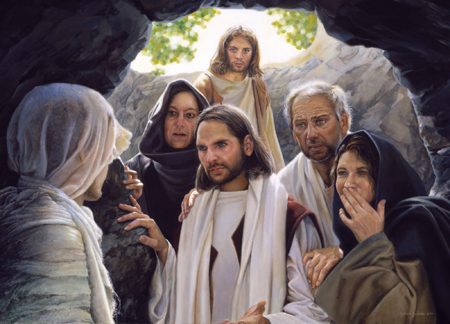

This would not be the last time that Jesus and Death go toe-to-toe. In fact, in John, the raising of Lazarus is the last straw and sets into motion the events that lead to Jesus’ own death: his arrest, trial, suffering, his crucifixion, and burial in a borrowed tomb.

It seemed to everyone present that even Jesus could not escape being swallowed up by death. And a stone was rolled into place as a reminder and witness. Those who sealed Jesus’ tomb may have remembered Lazarus, and perhaps thought to themselves, “Maybe the one raised that Lazarus guy could have kept HIMSELF from dying. But I guess not.” Point, set, match. Death wins.

Three days later, another Mary came to his tomb to mourn. But she found there a surprise waiting for her: a tomb without a stone and a grave without a body. Death, so used to swallowing up people, had instead found itself swallowed up by Jesus, just as Isaiah said– he will destroy the shroud over all the peoples, and the sheet over all the nations, and he will even swallow up death forever. The way things were has been turned upside down. All things are being made new.

Like with his friends Lazarus, Mary, and Martha, Jesus does not stand by to watch our grief from a distance. Jesus, the one who cried, is the one who wipes away our tears. Jesus, the one who died, is the one who removes the bitterness of death to instead promise us a rich feast and an end to separation, grief, and pain.

Jesus, the one who rose, knows what the inside of a tomb looks like. He knows what it like to be inside whatever kind of tomb we may find ourselves in, swallowed up by death, grief, illness, and suffering.

But Jesus is also outside the tomb, ordering the removal of the stone, and calling us by name to “Come out!”

This is what it means to be called a saint on this day, All Saints Sunday. To be a saint is to be called out of death to be part of God’s abundant life, right here and right now. To be a saint means being surrounded by the great crowd of the faithful who have gone before us into the glorious feast that God promises us.

To be a saint does NOT mean being extra holy, or pure, or having an immaculate life. There is nothing we can do to earn our way into sainthood. Rather, being a saint means living and trusting this notion that God loves us like crazy, and would even swallow up death for us so that we might have life. Living this way might leave us a bit dinged up from time to time, left over from our stints in the tomb. But that never stops Jesus from calling our name, to get out of the tomb and to follow him on the way.

Being a saint also means joining Jesus at the promised banquet with Grandma and Grandpa, those who have died in the last year, Lazarus, Mary and Martha… but also with other flawed, imperfect, and perhaps “unacceptable” people that didn’t expect to be there, with their own cracks and scars and tales of tombs to share. And who knows, they might be just as surprised to see US there, too.

But before we get there, between now and then, Jesus continues to show up, wipe tears from our faces, and call us forth from our tombs. And we continue to remember the saints who are no longer with us, who have gone ahead of us. And we remember that the title of saint is a gift, to all who have been in one kind of tomb or another, to all who cling to Jesus as he calls us forth into life and makes all things new. AMEN.


Thursday, October 22, 2015

Blind Bartimeaus


Social Media Sunday 2015 Resources!

Websites and Blogs to check out:

Enter The Bible
Her.menutics
Internet Monk
Rachel Held Evans
Nadia Bolz-Weber
Faith and Leadership
Common Prayer: a liturgy for ordinary radicals

Podcasts to listen to:

Krista Tippett, "On Being" Radio Broadcasts from 2015

Pastor Nadia Bolz-Weber on NPR's "Fresh Air"

Rob Bell, Pastor and author


Videos to watch:

ELCA Youth Gathering in Detroit (Speakers, music, etc)

ELCA Discussion on Confronting Racism

"Super Soul Sunday" With Oprah: Barbara Brown Taylor

TED Talk; Brene Brown


Packing Light for Your Journey

Sermon 10-11-2015

Grace and peace to God our father and from our lord and savior Jesus the Christ. Amen.

When was the last time you took a trip? Think for a moment about what you usually pack.
Is there something that you usually pack too much of?  Shoes, clothes, maps, electronics?
So, confession time. I tend to pack way to many books. For example, in preparing to travel to be with my family in Wisconsin to celebrate my brother’s wedding, this is what I’m thinking about bringing with me.

Rising Strong…. I can’t put it down, so good, but I’m almost finished….

Accidental Saints… Pastor Nadia Bolz-Weber’s newest book, can’t wait to start it.

Jane Eyre – rereading this old favorite

Texts from Jane Eyre… when I want something a little lighter than 18th century romance on the gloomy English moors…

Complete Psalms – modern translation, try to read a psalm every night…

RISE UP Bible

A book on writing that my friend recommended to me…

A novel that Karen Repka lent to me that I haven’t started…

Seriously these are all books that I have sitting next to my bed. Because I never REALLY know EXACTLY what mood I will be in and what book that will require.  And though I probably won’t bring ALL of these with me, I will still probably pack MORE than I need, and will end up regretting it when I am dragging my luggage across country.

Speaking of luggage, when I was a camp counselor back in Wisconsin, we had to pack everything we needed for an entire summer and make it easy to take to a different cabin every week.

Some of these campers we had, though, in packing for one week rivaled what we counselors brought for the entire summer. Curling irons, , hair dryers, running shoes, baseball cards, sugary snacks, both girls AND boys were sometimes guilty of this …and I can’t even imagine what camp counselors of today have to deal with - iPhones, iPads, tablets, and all kinds of electronics.

I think we might be surprised at how few things we need when we are focused on what is right in front of us – making new friends at camp, or spending time with family, noticing what’s happening on this journey we call life, rather than worrying about what to pack in order to be ready for whatever might be around the corner.

Jesus was setting out in a journey. Maybe he was in the middle of packing, though I can imagine that Jesus probably packed pretty light. Perhaps he was just stepping out the door of the house he was staying, or had just left the city limits. In any case, he was not long on his trip when a man runs up to stop him. And the last thing Jesus must have wanted was to deal with more questions.  

In a graphic novel version of the Gospel of Mark, the rich man is actually carrying everything he owns on his back – toasters, bowling balls, golf clubs, a swimming pool, a couch, flat screen TVs, signs of the “good life.” As he talks to Jesus, he is literally sinking into the sand under the weight of all his stuff while he asks Jesus his burning question

“What must I do to inherit eternal life?” What an odd question. That’s like me asking my parents, what must I do in order to be your daughter? Or my cats, if they could talk, asking me what must we do in order to belong to you? Or perhaps like Syrian refugees might say to all the countries that refuse to give them asylum: what must we do in order to be treated like human beings?

These refugees shouldn’t have to ask this question. They already are human beings and deserve to being treated as such. My cats already belong to me. I am my parents’ daughter.
What do you do to earn an inheritance? What an odd question. Because the answer is simple: nothing. YOU YOURSELF do absolutely nothing to receive any kind of inheritance that you have coming to you. The only criteria is that you are yourself, the receiver, the child to whom your benefactor is leaving their legacy.

So what then, can we do to inherit eternal life? It is to be who you are. It is to be a child of God.

THIS is the inheritance that we all have received at our baptisms, as we were washed with water and with promises from God. At that moment, we were claimed as God’s own beloved children and received God’s mark as belonging to God forever. And nothing can ever change that, not success or failure, not perfection or mistakes, not wealth or poverty or anywhere in between.

But BEING a child of God also means we pack for this journey we call life in a particular way, and we travel together on this road in a particular way.  

We, as beloved children of God, are called to follow Jesus, and as we have heard in the last few weeks, this call to discipleship really hard. Following Jesus means that we take up our cross. Following Jesus means that whoever will be first must be last. Following Jesus means welcoming the vulnerable and undesirable among us. And sometimes, following Jesus means letting go of what causes us to sink.

This is not what the rest of the world wants us to do AT ALL. According to this country and this culture – the more you earn and the more you can buy, the more you are worth. And the more stuff we have, the more prepared we feel we are for whatever this scary world throws our way. “I need this, and this, and this, just in case.” Those most prepared, with the most stuff, are admired and revered. And that means we need to get more stuff. And this is how our possessions come to possess US.

We try to buy our way out of our fear of the unknown.  It is must easier to calm our anxiety with a few more things than it is to trust in a vague eternal something that can’t be bought or earned. It is much easier to try to fill the empty void in our hearts with stuff than it is to put our trust in a man who the world never understood.

In the world’s eye, this Jesus was a loser – hung out with working class guys, never owned a house, or much of anything for that matter. No clothing lines or fancy buildings were named after him. He was a poor peasant from the wrong side of the tracks who DIDN’T “pull himself up by his own bootstraps,” get rich, and write a book. He died at the hands of his enemies without fighting back, leaving no earthly possessions, and left his disciples – who abandoned him - with no legacy to speak of.  

No legacy to speak of, that is, except the promise that eternal life is ours. And the promise that Jesus will be with us to lead us there. Even if we are still possessed by our possessions. Even if it’s like getting a camel through the eye of a needle.

Does this seem impossible? Perhaps. But God has never let the impossible stand in the way before. The losers of this world are actually winners in God’s kingdom? Impossible. The poorest and the least served first at the heavenly banquet? Impossible! The refugee and the stranger given premier status? Impossible. Giving up everything which results in receiving even more? Impossible! Death? Defeated? Impossible. Eternal life is really ours? Impossible!


For us, if we were to try to do all this on our own, it WOULD be impossible. But we were created by a God who laughs at impossible things. A God who welcomes rich people into heaven but gives poor people a place of honor. A God who gives the powerful a place, but not the place of honor. A God who demands everything of us while at the same time freely gives us everything. For us, this would indeed be impossible. But for God, the possibilities are endless. AMEN.

Monday, October 5, 2015

Peter and the Messy Middle

Sermon from 9-13-15

Grace to you and peace from God our father and from our lord and savior Jesus the Christ, Amen.

I really enjoyed seeing all the “first day of school” pictures on Facebook! Everyone dressed in their brand new clothes with their new backpacks filled with fresh notebooks, pens, pencils, and crayons. Just a few weeks ago, stores were filled with sales of schools supplies and full to the brim with all the college dorm essentials. Futons, pillows, lamps, crates, mirrors, rugs, bean bag chairs, matching sheet sets, everything you see in the “perfect dorm room” pictures can be yours at your local Target!
Not real life, so much.
But in a few weeks, those clothes won’t be so new, the crayons might be broken, the pens leaking, the notebooks lost or chewed by the dog, the futon legs snapped, the rugs get dirty, and no one but you really cares about the cool design on your duvet. (That’s the fancy Target word for comforter.) In the meantime, real life happens.

Often we begin each fall like a second New Year. There are new classes and schools to attend, new initiatives at work, new routines at home. We try to put our best foot forward, strategizing for how to be a better student, better parent or grandparent, a better teacher, a better leader and role model at work and at home. We have the best plans and make the best preparations…

… And we usually end up falling flat on our faces.

… Like Peter.

Though we are at the very beginning of the academic and program year, in this morning’s gospel we find ourselves in the very middle of things. The disciples have been following Jesus around for about half of the book of Mark by now. They’ve seen Jesus heal people, walk on water, and feed thousands. They’ve heard him preach the good news and tell stories about the Kingdom of God. They’ve seen him defy the religious authorities and risk everything to share the good news. And now we’re halfway through the Gospel of Mark, halfway through Discipleship 101 if you will, and Jesus decided to check their progress with a little surprise midterm exam. “After I’ve done all this,” Jesus asks them, “who do other people say that I am?”

To this, some of them respond with “option A,” a return of John the Baptist, who had at this point been beheaded by Herod for his subversive preaching. Other disciples go with option B - Elijah, considered by many the greatest prophet. And still others respond with option C, always a safe bet, one of the other prophets, which, you know, covers the rest of the bases.

Ok, so Jesus started out with an easy one. It was basically an opinion poll. Now it’s time for Jesus to see how much the disciples have been paying attention in the last eight chapters. Time for the second, and most important question: “But who do YOU say that I am?”

Which option will they pick? Option A, John the Baptist? B, Elijah, or C, one of the prophets?
It is Peter, oh our favorite disciple Peter, who is somehow able to see right through Jesus’s little quiz. Peter goes right for option D, hidden in plain sight for this entire gospel.

“You … you are the Messiah!” Peter answers.

Ding ding! We have a winner! Confetti! Balloons! That’s right, Jesus IS the messiah! The one to save Israel! The one who has been foretold! Way to go Peter!

And then… Oh Peter. Peter, Peter, Peter. You couldn’t stop there, could you? Perhaps inflated with actually getting something right, Peter then proceeds to tell Jesus HOW to be the Messiah.

“Now look here, Jesus. You are the Messiah, and that has nothing to do with all that other stuff you just told us. There will be none of that SUFFERING stuff, none of that REJECTION stuff, and ESPECIALLY none of that DYING stuff! Haven’t you read the scriptures, Jesus? The Messiah is supposed to ride into town on a big white horse and show these Romans who’s boss! No, no, Jesus. You’ve got this Messiah thing all wrong.”

To which Jesus responds, “Get behind me, Satan.”

Ouch.

We tend to be so hard on poor Peter, but we’ve all been there too, wanting to choose the cleaned-up version of Jesus. “Surely Jesus did not REALLY mean for us to welcome those people.” “Surely Jesus doesn’t REALLY mean for us to take up AN ACTUAL cross.” “Surely Jesus doesn’t REALLY mean for us to LOSE OUR LIVES for him, like actually die, right?” Right????

We tend to be so hard on poor Peter, probably because Peter is us. We would all prefer to live at the beginning of the story where everything is still shiny and new; or to skip all the way to the end, where everything is nicely wrapped up.

But we don’t live our daily lives there, at the beginning or at the end of the story. We live in the middle.  And the middle is messy. And what totally stinks is that there is no way to skip it or fast forward ourselves through it. (See Brene Brown's new book Rising Strong).

The middle is the dark place where you don’t know what’s going on, and nothing makes sense, and no matter how hard you try you can’t seem to make any headway. All your excellent preparations and your good intentions don’t count for anything, and honestly you have no idea if this whole mess is going to turn out OK or not, and it feels like you must be the only one stuck down here, face down in the dust.

But you’re not alone down there. The mess in the middle is exactly where Jesus chooses to be.

The good news is that to be a follower of Jesus, we don’t have to have it “all together.” We don’t have to wait until we’ve picked ourselves up after a fall. We don’t have to wait until our schedules get less crazy. We don’t have to wait until our lives look more like the perfect dorm room in the Target catalog.

 But the flip side is that following Jesus is not a path OUT of the messy middle, either, like Peter thought. Peter saw Jesus as a ticket OUT of oppression and right INTO the seat of power for some payback. But that is not the road that Jesus walks, and it is not the road that Jesus calls us to. The road that Jesus calls us to is one he himself followed to it’s very end: the road of self-denial for the sake of others, the road of losing oneself for another’s gain, the road that looks to the world like a road of shame and weakness, everything we all would much rather avoid. A road that leads to a cross.

Following Jesus may lead us directly through the valley of the shadow of death, but in truth, we could not have a better guide than the one who has walked this road BEFORE us, and who continues to walk this road WITH us. Even when, ESPECIALLY WHEN we fall flat on our faces.

Peter took a chance, opened his big mouth, and had a big fat fail. For every step forward on this road, he seems to take a step backward. And Jesus had to know that this would not be the last time that Peter, and the rest of the disciples, would fail Jesus, big time. But still, Jesus does not reject Peter. In fact, when Jesus says “Get behind me, Satan,” he’s telling Peter – not to leave - but to get behind him IN ORDER TO BETTER FOLLOW HIM. Get back in the line, Peter. You can’t follow someone if you are not letting them actually lead.

If we say we follow Jesus, if we, along with Peter, say that Jesus is the Messiah, Lord, and Savior - are we really ready to let Jesus do his job?

Because if we are, we better buckle up because this road is going to be anything but boring. You may lose the world but you will gain your life. You may win a cross but death will lose its sting. You may lose your life but you but Jesus has won the victory over the grave.

So let’s get ready… to fall flat on our faces. Who’s with me? Can I get an AMEN?

Wednesday, August 26, 2015

Bread: Food of Resurrection

Sermon 8-16-15

Grace and peace to you from God our father and from our Lord and Savior Jesus the Christ. Amen.

Goodness, Jesus. Enough with the bread already. We get it, ok? Jesus…. Bread. Jesus, bread. Jesus-bread. Bread seems like it should be pretty easy to understand… right?

But have you ever actually made bread? Do you understand the art and the science that goes into this food that has been part of our diets for thousands of years? Have you ever thought about where bread comes from?

After church today I can hop in my car and drive down to Shop Rite, and there I can buy any kind of bread imaginable – super white bread, whole-wheat bread, honey wheat bread, 9 grain bread, pita bread, rye bread, sourdough bread, Italian bread, French bread, poppy seed bread, you name it, they probably have it. I can walk in, make my selection, go home, and enjoy it. In no other time in the history of the world has this been possible, and there are still many places around the world and in our own country that this is not the case.

If you or your child recently took first communion classes at this church, you might remember a little of how that bread was made. There was some flour sifting, some mixing, some milk and honey and yeast being added, some shaping. You saw the ingredients come together. You felt the flour on your hands as you kneaded the dough. You smelled the honey. You heard laughter as we all tried to keep the mess to a minimum. You may even have snuck a taste when the rest of us weren’t looking. And then in the oven it goes, and out pops some of the most delicious bread ever.

But I for one don’t know how bread “works.” I’ve never thought about how it is that power from a crushed plant, plus water, plus a fungus could be so delicious. Bread is amazing, if you really think about it. It is actually alive, then dies, then lives, then dies again, so that WE can live. (This TED talk is where I learned all the following about bread)

The plant we call wheat grows tall and strong, creating seeds, which over the course of thousands of years, has learned to graciously release them to us. Seeds, if you remember from your sixth grade science course, are potential life. Some of these seeds we do indeed save and plant in the next growing season. But some goes into making our bread.

The wheat was alive, and the seed is potential life, but then… we crush it. Obliterate it. Take away any possibility for sprouting and growing. A seed is not dead, but flour is.

BUT THEN we combine the flour with water and yeast… and it becomes alive again. As the yeast grows, it actually burps and sweats, making the bread rise up and taste good. Kinda gross, but oh so delicious. This bread becomes a living thing.

And then, we put in in the oven. The heat makes the dough solid, and the crust crispy, and the ingredients bond, but it also kills the yeast. So what comes out of the oven is no longer alive in any way. No seeds, no yeast. Just… bread.

But then… we eat it. We gather around a table, we laugh, we cry, and we eat bread. I mean, what Italian meal would be complete without it?

So the bread comes alive once again, in us. It was alive, then dead, then alive, then dead, then once again alive. Bread truly is a food of resurrection.

The men and women who were listening to Jesus that day could not have told you about all the reasons that bread is bread. They just knew. They knew it, deep down in their bodies. The women knew with their sweat and their aching arms and a day’s work what it means to go from crushed seed to steaming bread to feed their families. The men knew with their sweat and their aching arms what it means to eat what their women have transformed - from the seed they harvest to the bread they eat. They knew in their bodies that bread is more than just bread, and eating is more than just eating.

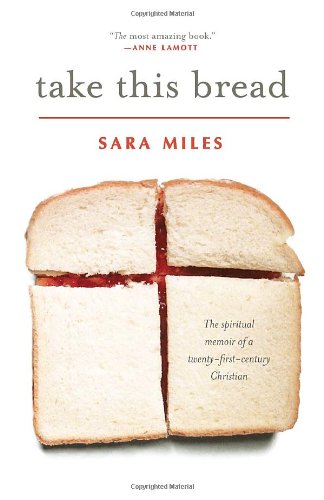
A woman named Sara Miles knew this too. She might be the last person that we would expect to see in church: a staunch atheist and skeptic, world traveling war correspondent, lesbian, and single mom. But one day she walked into St. Gregory’s Episcopal Church in San Francisco, California, and received Holy Communion for the very first time.

And it changed her life. She describes that moment when she at the bread and drank the wine, as Jesus happened to her. From that moment on, Jesus had lodged into her, like a crumb, refusing to be shaken off. She went home that day shocked and confused at what happened. But she did know one thing, knew it deep in her body: she wanted that bread again. And again. And again.

If you recall, all those weeks ago when we first started the “bread of life” part of the summer, the first part of the story Jesus feeds people. He takes five loaves and two fish and feed over five thousand people. That’s about the entire population of Hightstown. Jesus fed all these people ACTUAL BREAD before he started he even began saying “I am the bread of Life.”

We are what we eat. When we eat bread, we eat death and resurrection and our bodies continue to life. And when we eat Jesus, we are eating Jesus’ death and resurrection, and we continue to live in Jesus.

This kept Sara Miles coming back, week after week, to receive the body and blood of Jesus. She later joined St. Gregory’s, got baptized, and became an active member on the congregation, eventually helping to serve communion herself. Then she started a hugely successful food pantry, which grew to hundreds of people, which became very controversial within the congregation. But along the way, she realized something.

As she was in yet another meeting about “church growth” along with one of her priests. As they talked afterward, she said to him, “The point of church isn’t to get people to come to church… [it’s] to feed them, so they can go out and, you know, be Jesus.” (p. 267)

We are what we eat. When we eat bread, we grow healthy and strong, ready for the day. When we eat Jesus, we are also strengthened for the journey of following Jesus and actually becoming more like him. And so sometimes we are able to be Jesus for one another.

I experienced Jesus just recently, during the ELCA Youth gathering. Actually I saw him show up quite a bit, but this particular time was when the entire New Jersey Synod gathered in one big room. Our time together closed with worship, and a couple of youth from one of the Mercer county churches we went with helped to serve communion. As this particular young man placed the bread in my hand, he said “the blood of Christ shed for you.” And these words were more beautiful and meaningful to me than if he had gotten the words “correct.” They were beautiful and true because they were spoken in the name of the one who gives all of us life through his body and blood.

This life we receive keeps us coming back for more, week after week. The rest of the week can often try to defeat us and deplete us. This is not an easy road, to follow in Jesus’ footsteps when the rest of the world around us would rather follow something or someone else.

In the end, it’s not about how well we think we understand what Jesus is saying – that’s where Jesus’ critics got into trouble and missed the whole point. It takes a lifetime to wrestle with and literally CHEW ON all that Jesus is and teaches. It’s not really about the “right” words or the “right” thoughts or the “right” people. In the end, it all comes down to the promise that Jesus is the living bread and that by eating it we will be forever with him. That God is with us in a way that we can see and touch and smell and taste in Jesus. And through us, other people are able to see and hear and touch Jesus. AMEN.


Tuesday, August 11, 2015

"There is nothing here"... Except everything.

Sermon from 8-9-15

Grace to you and peace from God our father and from our Lord and Savior Jesus the Christ. Amen.
Cross Roads

I love camp. I love everything about camp: The singing, the campfires, being out in nature, making new friends, having new experiences. At the Lutheran camp in Wisconsin that I worked at, and at Cross Roads Camp up in Califon, there are also the worship songs, the skits about Jesus, and reading God’s word out in nature. I actually went up to Cross Roads on Thursday to see camp in all its camp glory, and it was AWESOME. Kids of all different ages, sizes, colors, and athletic ability were playing games and running around having fun, singing songs, and basically being the Kingdom of God right here on earth.
Pine Lake Camp Staff '06

But camp life isn’t always fun and games. Being on the camp staff was fun, but it also came with responsibilities. One of these less than fun aspects was instilling in campers the importance of the “Buddy Board.” In addition to lifeguards, the Buddy Board is how Pine Lake Camp in Wisconsin kept swimming campers safe. Every camper got a number, and when they swam in Pine Lake, their number and their buddy’s number were put together on the board. They didn’t have to be attached at the hip for the entire swimming time, but when the lifeguard called for a “Buddy Check,” you found your buddy and waited patiently until everyone was accounted for.

During staff training, we would do drills for in the event of a buddy having gone missing. And we all hoped and prayed that we would never hear the “lost camper” alarm sound across camp. I can still feel the rush of dread during those times – fortunately they were FEW - that it was not a drill. And also fortunately, during those summers, it was always a camper who had wandered away from the beach and NEGLECTED to “check out” of the Buddy Board.

There were always those weeks where the “lost camper” alarm went off more than once, or when campers were otherwise challenging, or when counselors were causing drama, or when lice broke out, or when your campout got rained out, or the whole camp lost power in a thunderstorm. There are always those weeks you want to throw up your hands and give up. Very much like in life - Real life sets in, life reminds you how difficult it is, and “these weeks” become months or even years. It makes us want to throw in the towel, and pack it in, run away and crawl into a hole to make it stop.

Like Elijah. Here was a prophet who couldn’t catch a break. He is doing amazing work in Israel in the name of the Lord – miraculously providing food for the widow at Zarephath then reviving her son, then confronting the priests of a false god in a dramatic showdown, and even ending a long drought. But through everything, the people in power constantly chased him and wanted to kill him. And.  He. Just. Can’t take it anymore. He was dried up, burned out, emotionally drained, sick with dread, burdened with the fear he carried. So he pretty much crawls into a hole and tells God he wants to die. He even falls asleep out of his sheer exhaustion.

We’ve all been there too, right? We’ve come to the end of our rope, dried up, burned out, emotionally drained, sick with dread, terribly burdened with the fear we are carrying. When was the last time you wanted to get away from it all, to tell God and everyone else to leave you alone because You. Were. Just. Done. Was it … six months ago? Last week? Yesterday? Five minutes ago?

Elijah, like us, was a guy who just couldn’t catch a break. Because instead of granting his request, God sent a messenger with food to sustain him and words to encourage him. There, under the tree of Elijah’s despair, is water and warm cakes freshly baked on hot stones. Hmmm that sounds so good right now, doesn’t it? And here we also have the first ever mention of something like an energy bar, because these cakes sustained Elijah for 40 days and 40 nights, so that he could hear the next message that God had in store for him.
By artist He Qi

Elijah was a recipient of God’s buddy system. Just when it looked like Elijah was on his own, left high and dry by the Almighty; just when it looked like it was time to sound the “Lost God” alarm, God came through. And I’m guessing that every single one of you have your own “under the broom tree” experience too: Where everything looked bleak and dark, but somehow, someone came through for you, or help showed up for you in an expected way. A word of encouragement to get you through. Food that comes out of nowhere just when you needed it.

God tells and shows us, over and over again, that you will never be left on the Buddy Board without a buddy.

This is what Jesus is trying to get across to his listeners as we overhear his conversation in our latest installment of the “Summer of Bread” Sundays. God does not stop at sending messengers with delicious hot cakes. For us, God pulls out all the stops. God stops at nothing to make sure that no one is abandoned, that no one is left behind, that no one who seeks God is cast away and left hungry. God goes the distance, by sending down God’s own son, so that each one of us can be Jesus’ “plus one” at heavenly feast.

As Psalm 34 says, “Taste and see that the Lord is good.” Hmm those words might sound a little familiar. Every Sunday, all across the country and the world, pastors stand before their communities of faith and welcome all to the Lord’s table in the name of Christ to share a taste of the feast to come. And many of them, including myself, choose to say these very words from this very psalm. It is not just the bit of bread and the sip of wine that you taste when you come forward for communion every Sunday. It is the very goodness of God you are receiving, over and over again, keeping us going while we are still under the broom tree with Elijah.

But like with Elijah, being the recipient of this great gift of sustaining life from God comes with a charge. Elijah’s journey continued, as does ours. We eat, and then we rise.
The theme for our week in Detroit with thirty thousand other Lutheran youth was “Rise Up.” The “theme song,” written by none other than the Lutheran hip hop artist Dave Sherer A.K.A. AGAPE – I bet you didn’t know we had a Lutheran Hip Hop artist, did you? – the lyrics go, “We will rise up like the sun, led by the Risen One.” We will certainly rise because Jesus is risen. But this also means that we are to imitate Christ in other ways as well. As the letter to the Ephesians encourages this congregation and US, to imitate God, we are all reminded that “… we are all members of one another.”


We are all part of the buddy system. We’re all together on the Buddy Board. And sometimes we have fallen down on the job. We have lost a few along the way. There are people all around us that have collapsed underneath their own broom trees. There are some right here in our own county who have fallen behind or have been lost.

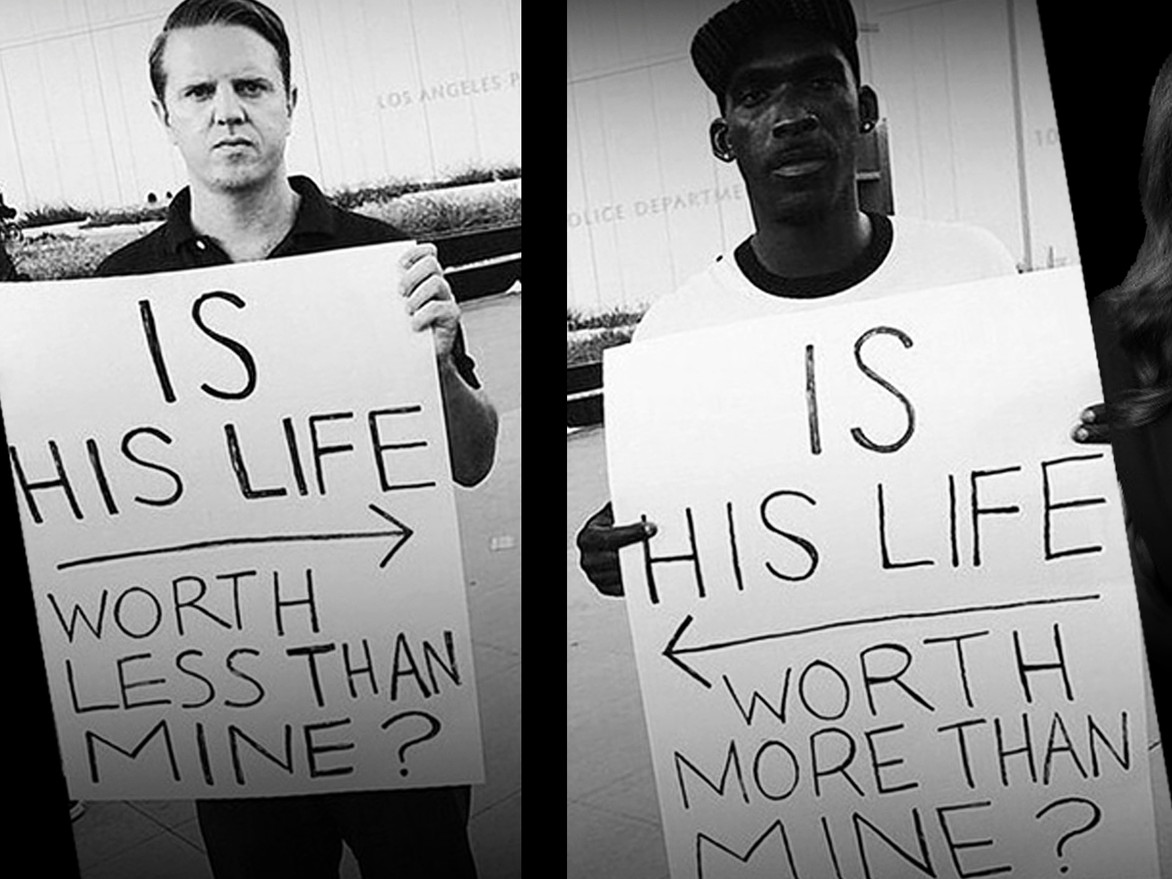
Right now our country is in the middle of some very difficult conversation about race and racism. Many, myself included, have to keep being reminded of our own tendency to believe the messages of the world that tell us that certain types of people SHOULD be left behind, abandoned, forgotten, or go hungry, because they inherently deserve it. I have to be reminded, rather, to imitate Christ, to “not make room for the devil” as Ephesians put it, and to remember that – the risen Christ has raised me up, fed me and sustained me, and I am called to do the same. I have to be reminded that when I raise someone up, WE. ALL. RISE. UP…. TOGETHER. Like we are one big loaf of bread.


BUT. There are definitely days I don’t do this. And that can put me right back under the broom tree, burned out, overwhelmed, despairing. But that is also right where God is, if you remember, insisting that we eat something for the journey ahead. So come, taste and see the grace eternal. Taste and see that God is good. Amen.